Processes split across tools
Important tasks move through spreadsheets, email and disconnected apps.
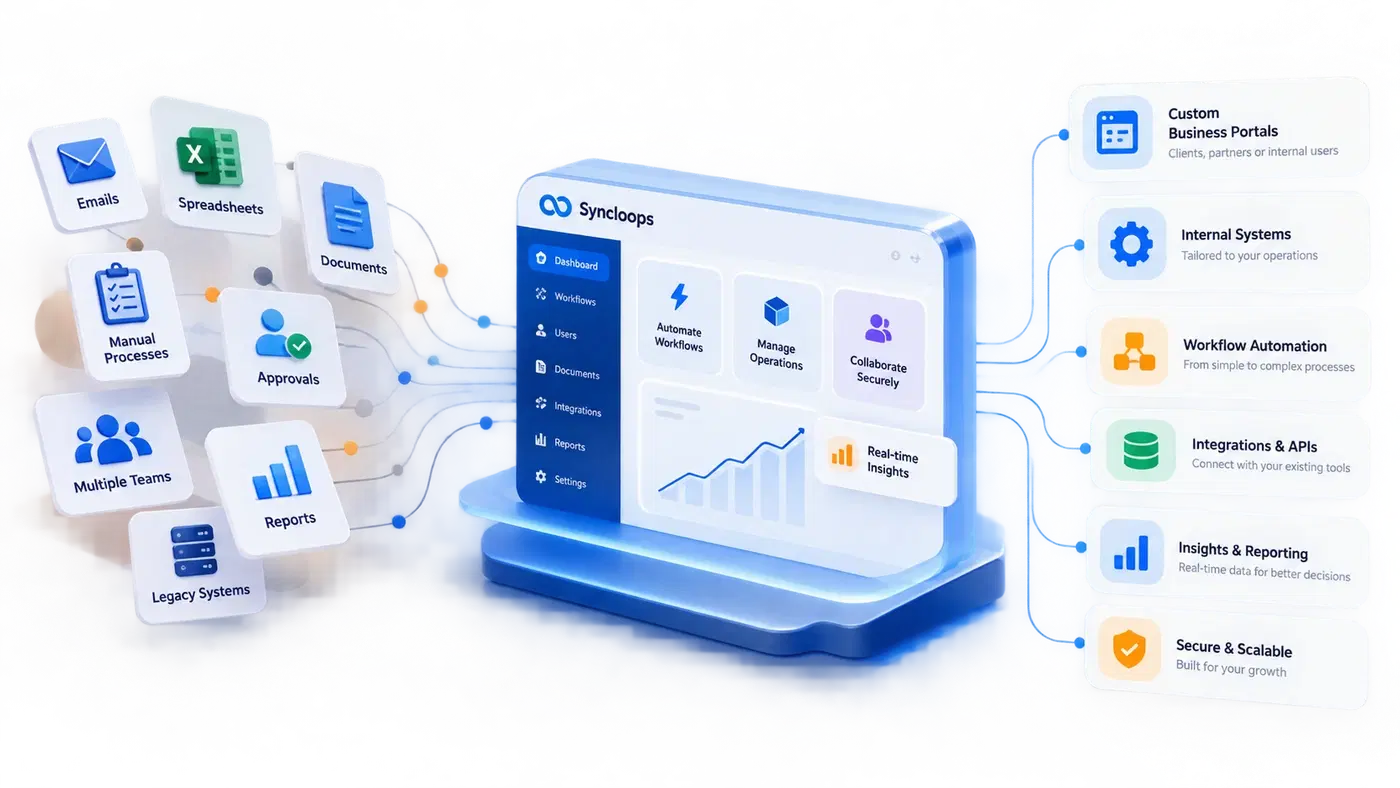
Software built for the work your business actually does.
From a focused internal tool to a multi-department business platform, we design and develop applications around your processes, users and data. We assess ready-made options first, then build custom software where it creates clear business value.
Custom business software development is the analysis, design and implementation of applications built for an organization’s specific workflows and users. It can cover internal tools, approval systems, operations platforms, client portals and integrations. It is distinct from designing a public marketing website or configuring a packaged ERP.
A project does not have to be enterprise-scale to justify a tailored system. The deciding factors are workflow complexity, data, integration requirements and ongoing operational value.
Important tasks move through spreadsheets, email and disconnected apps.
Managers struggle to track requests, ownership, approvals or changes.
Existing products may require workarounds for a critical business process.
A focused internal tool and a multi-department application have different delivery scopes. The examples below are categories of solutions, not prebuilt Syncloops products.
Manage internal requests, responsibilities, escalations and service status in a role-based application instead of scattered spreadsheets and email.
Give authenticated clients, suppliers or partners access to their requests, approvals, documents and progress, with rights defined by the project.
Define multi-step reviews, approval rules, deadlines, assignments, notifications and exception handling for operations that need a traceable path.
Develop tailored operational tools for departments, projects, field service or specialized business processes, with clear data and user roles.
Bring agreed data sources into useful management views, operational reports, exception lists and decision-support dashboards.
Plan APIs, data synchronization and progressive replacement of legacy components when available access, documentation and licensing permit.
The following examples illustrate possible project scopes. They are not presented as delivered Syncloops case studies.
Different teams receive requests through email and Excel with no shared owner, status or approval process.
A company uses a core ERP but manages a specialized process separately because existing modules do not fully cover its needs.
Clients and partners rely on calls and messages to ask for project progress, documents and updates.
Tell us what happens today, who uses the process and what needs to change. We can help determine whether configuration, an existing platform or custom development makes more sense.
The architecture varies by project. We define permissions, process logic, data ownership, integrations and deployment requirements before confirming a technology stack.
Employees, customers, partners
Workflows, roles, validations
Storage, APIs, existing systems
Illustrative architecture. Actual integrations and access controls are determined after technical discovery.
The technical scope is defined after discovery, not sold as a fixed set of features. Each component should support an agreed workflow or business outcome.
Translate existing procedures into user journeys, business rules, exceptions, acceptance criteria and a realistic delivery boundary.
Design user access around responsibilities, approval authority and data visibility, including external users if needed.
Plan core records, relationships, validations, status transitions and a maintainable data model.
Assess endpoints, authentication, sync frequency, vendor licensing, error handling and ownership before committing to integration.
Define useful KPIs, filters, exports and operational exception reports based on the data the system can actually capture.
Document test cases, acceptance process, hosting dependencies, code delivery, credentials and post-launch support responsibilities.
Development is planned in verifiable phases with clear boundaries and acceptance criteria.
Users, workflows, bottlenecks and business goals.
Evaluate SaaS, existing tools, configuration or custom build.
Specify features, integrations, security and deliverables.
Release testable features and verify workflows with users.
Deploy, hand over and agree ongoing support separately.
A discovery-to-delivery map helps determine what belongs in the first release and what should wait for later phases. This is a process illustration, not a screenshot of an existing product.
We match solution complexity to the actual business need, rather than recommending a new platform by default.
Best when the workflow is standard and a current product covers the requirement.
See Odoo ERP ←Suitable for unique processes, focused internal applications or specialized multi-system workflows.
Discuss a custom project ←Formal document governance and public website design have their own specialist service pages.
Explore ECM ←The appropriate route depends on how unique the workflow is, time to value, integrations, total ownership cost and long-term maintenance.
| Approach | Best fit | Constraints to assess |
|---|---|---|
| Existing SaaS / off-the-shelf | Common workflows with standard requirements and quick deployment priorities. | Subscription, feature limitations, data export, API limits and vendor dependence. |
| Configure an existing platform / ERP | Standard operations need configuration, permissions or existing modules. | Licensing, module boundaries, upgradeability and supported customization. |
| Low-code / no-code | A focused internal workflow can fit platform capabilities without heavy engineering. | Scalability, permissions, platform limits and handover. |
| Custom business software | Distinct processes, specialized user journeys or integrations justify tailored functionality. | Build and maintenance cost, technical ownership, security, testing and long-term support. |
We assess whether a simpler existing option can solve the requirement before recommending a custom build.
For packaged ERP requirements, explore Odoo ERP. For document governance, see ECM. Company marketing websites are handled through the separate website development service.
Access, privacy, release management and ownership differ by project. These controls are specified in the statement of work and implemented according to its approved scope.
Define what employees, managers, clients and partners can read, approve, edit or export.
Agree on sensitive fields, retention needs, test data, backups and any applicable legal or sector requirements.
Decide which actions require records, reviews, alerts or traceability rather than assuming every operation needs an audit log.
Select the hosting and deployment approach according to availability, access, budget and client requirements.
Confirm deliverables, licensed components, repositories, domains, production accounts and handover in the contract.
Check third-party approvals, API quotas, provider terms, credentials and potential future charges.
Requirements differ across sectors, users and internal policies. We account for how a Saudi team will operate the solution, without promising compliance or integrations before assessment.
Direction, terminology and role-based user journeys planned from the start.
Define operational access and audit requirements within project scope.
Agree on infrastructure, credentials, handover and data responsibilities.
Confirm external APIs, licenses and access limitations before commitments.
The engagement is structured around the business problem, the smallest workable scope, and a maintainable handover—not feature lists for their own sake.
Start with operational discovery and the decision to build or buy.
Separate confirmed work from third-party integrations and later phases.
Define source code, accounts, deployment and support responsibilities in the agreement.
Both are possible. A focused internal application and a complex multi-department platform require different scopes. We assess the workflow, user count, integrations and project priorities before proposing a solution.
No. This page covers applications that run business processes—such as portals, internal management systems and workflow software. For company websites and marketing sites, visit the separate website development service.
Potentially, if supported APIs, access rights and licensing make the integration feasible. We verify the technical dependencies and specify them separately.
Yes, if the requirements allow a useful first release. We define the essential workflows, success criteria and later phases before development.
Ownership, handover, licensing and account access must be stated in the signed agreement. We recommend that the client controls its production accounts and business data.
The timeline depends on modules, roles, workflows, data migration, integrations, security and testing. It is estimated after discovery and a scoped technical proposal.
Arabic and English interfaces can be included in scope. Sector-specific rules, hosting and data requirements are assessed with the client rather than assumed.
A brief description of the problem, system users, essential features, current tools and expected integrations is enough to begin a discovery conversation.
Custom business software handles organization-specific workflows and users. An ERP provides packaged business modules, while a corporate website primarily presents information and generates enquiries. A project may use more than one, but their service scopes are different.
Price depends on discovery, workflows, user roles, data structures, UX, APIs, migration needs, testing, deployment, third-party services and support. A reliable quotation requires a defined scope and assumptions.
An MVP is a first usable release with agreed core workflows, users and acceptance criteria. Complex integrations, extra departments, advanced reports and additional features may be separate phases.
Support, hosting, incident handling, maintenance, enhancements and response times should be agreed separately. Ownership of production accounts and project deliverables is defined in the contract.
Describe your process and expected users. We will start by understanding the requirement, then discuss an appropriate path and scope. Do not enter credentials, client records or confidential information.
برمجيات تعمل وفق احتياج مؤسستك، لا العكس.
من برنامج داخلي بسيط إلى منظومة أعمال تربط عدة إدارات، نصمم ونطوّر حلولًا برمجية حسب العمليات والمستخدمين والبيانات. نقيّم الحلول الجاهزة أولًا، ثم نلجأ للتطوير المخصص عندما تكون له قيمة تشغيلية واضحة.
هي خدمة تحليل وتصميم وتنفيذ تطبيقات تُبنى حول احتياج العمل الفعلي، مثل برامج الإدارة الداخلية وبوابات العملاء وأنظمة الطلبات والموافقات والتكامل بين المنصات. تختلف عن تصميم موقع تعريفي، كما تختلف عن تهيئة نظام ERP جاهز.
ليس شرطًا أن تكون مؤسستك كبيرة لتحتاج برنامجًا مخصصًا. الأهم طبيعة العملية، وعدد المستخدمين، ومتطلبات البيانات والتكامل، والقيمة التي سيضيفها النظام.
إجراءات مهمة تُدار عبر Excel ورسائل وتطبيقات لا تتبادل البيانات.
الطلبات والموافقات والمسؤوليات غير واضحة بما يكفي للإدارة.
قد تضطر المؤسسة لتعديل إجراءاتها باستمرار لتناسب نظامًا غير ملائم.
قد تحتاج المؤسسة برنامجًا بسيطًا لإجراء واحد، وقد تحتاج نظامًا تشغيليًا يربط إدارات متعددة. تختلف المتطلبات والتكلفة وطريقة التنفيذ بين الحالتين. الأمثلة التالية أنواع حلول وليست منتجات جاهزة.
إدارة الطلبات والمسؤوليات ومراحل التنفيذ والتصعيد في برنامج بصلاحيات واضحة، بدل الاعتماد على الجداول والبريد المتفرق.
بوابات دخول للعملاء أو الموردين أو الشركاء لمتابعة الطلبات والمستندات والحالات وفق الصلاحيات المحددة للمشروع.
تصميم مراحل المراجعة والموافقة والتكليف والإشعارات والاستثناءات، بحيث يكون مسار كل إجراء مفهومًا وقابلًا للمتابعة.
برامج لتشغيل الأقسام أو المشاريع أو الخدمات أو العمليات المتخصصة، مع قواعد عمل وبيانات وأدوار مصممة للاحتياج.
إعداد تقارير تشغيلية ومؤشرات واستثناءات ولوحات متابعة مرتبطة بمصادر بيانات متفق عليها وصالحة للاستخدام.
تقييم تطوير التكاملات أو تحديث مكونات الأنظمة القديمة تدريجيًا بحسب توافر الواجهات والصلاحيات والتراخيص.
الأمثلة التالية توضيحية لشرح نطاقات ممكنة، وليست دراسات حالة أو مشروعات نؤكد تنفيذها.
تستقبل إدارات مختلفة الطلبات بلا مسار موحد للمسؤوليات والحالة والموافقات ومواعيد التنفيذ.
تستخدم الشركة نظام ERP للعمليات الرئيسية، لكن هناك إجراء متخصص يجري خارج النظام بسبب اختلاف متطلبات العمل.
يعتمد العملاء والشركاء على الاتصالات والرسائل لمتابعة الحالات والمستندات والتحديثات.
صف لنا كيف تعمل العملية حاليًا، ومن يستخدمها، وما الذي تحتاج تغييره. نقيّم إذا كان الأنسب نظامًا جاهزًا أو تهيئة منصة قائمة أو تطويرًا مخصصًا.
تختلف هندسة النظام حسب طبيعة المشروع. نحدد الصلاحيات ومنطق العمل وملكية البيانات والتكاملات والاستضافة قبل اعتماد التقنية.
موظفون، عملاء، شركاء
الإجراءات، الأدوار، التحقق
التخزين، APIs، الأنظمة الحالية
مخطط توضيحي. التكاملات والصلاحيات الفعلية تُحدد بعد التقييم الفني.
لا نفترض أن كل ميزة مطلوبة لكل مشروع. نحدد النطاق الفني بعد فهم الاحتياج، ونربط كل جزء بنتيجة تشغيلية محددة.
تحويل الإجراءات الحالية إلى رحلات مستخدم، وقواعد عمل، وحالات استثنائية، ومعايير قبول وحدود واضحة للنطاق.
تصميم الوصول بحسب مسؤوليات الموظفين والمديرين والعملاء والشركاء وسلطة الاعتماد وحدود رؤية البيانات.
بناء العلاقات بين السجلات والتحقق من البيانات وانتقالات الحالة وفق نموذج بيانات قابل للصيانة والتوسع.
فحص الواجهات والمصادقة ومزامنة البيانات والتراخيص والأخطاء والاعتماديات قبل الالتزام بتكامل معين.
تحديد مؤشرات وتقارير وفلاتر وتصدير بيانات قابلة للاعتماد على ما يجمعه النظام بالفعل.
وضع سيناريوهات الاختبار والقبول والاستضافة وتسليم الكود والحسابات ومسؤوليات الدعم بعد الإطلاق.
نحدد مراحل واضحة ومخرجات قابلة للفحص والاعتماد بدل البدء في البرمجة قبل فهم المتطلبات.
المستخدمون، الإجراءات، التحديات والهدف التجاري.
مقارنة الحلول الجاهزة والتهيئة والتطوير المخصص.
تحديد الوظائف والتكاملات والأمان والمخرجات.
تنفيذ مراحل قابلة للتجربة والتحقق مع المستخدمين.
نشر النظام وتسليمه والاتفاق على الدعم بشكل مستقل.
يوضح المسار كيف نحدد ما يجب إطلاقه أولًا، وما يمكن تأجيله لمرحلة لاحقة. هذا رسم توضيحي لآلية العمل وليس واجهة منتج موجود.
نختار التقنية حسب المشكلة الفعلية، بدل اقتراح بناء نظام جديد دون حاجة.
مناسب عندما تكون الإجراءات قياسية ويمكن تغطيتها بمنصة متاحة.
استكشف Odoo ERP ←مناسب للعمليات الخاصة أو البرامج الداخلية المحددة أو الأنظمة متعددة التكاملات.
ناقش مشروعك ←لإدارة الوثائق الرسمية أو المواقع التعريفية خدمات متخصصة منفصلة.
استكشف ECM ←نختار المسار بحسب تميز الإجراءات والوقت المطلوب لتحقيق القيمة والتكاملات وتكلفة الملكية والصيانة على المدى الطويل.
| المسار | متى يكون مناسبًا؟ | القيود التي نراجعها |
|---|---|---|
| برنامج SaaS جاهز | لإجراءات قياسية مع أولوية سرعة التشغيل وتوافر وظائف مناسبة. | الاشتراك وحدود الوظائف وتصدير البيانات وقيود API والاعتماد على المورد. |
| تهيئة منصة قائمة أو ERP | لعمليات قياسية تحتاج إعداد وحدات وصلاحيات وتدفقات عمل موجودة. | التراخيص وحدود الوحدات وإمكانات التخصيص والتحديث. |
| حلول Low-Code / No-Code | لإجراء داخلي محدد يمكن تنفيذه ضمن قدرات المنصة دون هندسة معقدة. | التوسع والصلاحيات وحدود المنصة والتسليم. |
| تطوير برنامج أعمال مخصص | لإجراءات خاصة أو رحلات مستخدم متميزة أو تكاملات تستدعي وظائف مصممة خصيصًا. | تكلفة التطوير والصيانة وملكية الكود والأمن والاختبارات والدعم. |
نقيّم أولًا إمكانية استخدام حل موجود أو أبسط قبل التوصية بالتطوير من الصفر.
إذا كان الاحتياج نظام ERP متكاملًا، استكشف Odoo ERP. ولحوكمة المستندات، راجع ECM. أما المواقع التعريفية والتسويقية فلها خدمة تصميم المواقع منفصلة.
تختلف متطلبات الوصول والخصوصية والنشر وحقوق الملكية من مشروع لآخر. تُحدّد البنود في نطاق العمل والعقد، ويُنفذ ما يتم اعتماده فقط.
تحديد ما يمكن لكل موظف أو مدير أو عميل أو شريك رؤيته أو تعديله أو اعتماده أو تصديره.
الاتفاق على البيانات الحساسة ومتطلبات الاحتفاظ والنسخ الاحتياطي وأي متطلبات تنظيمية أو قطاعية تنطبق.
تحديد الأفعال التي تحتاج تسجيلًا أو مراجعة أو تنبيهًا بدل افتراض وجود سجل شامل لكل خطوة.
اختيار الاستضافة وآلية النشر وفق التوافر والأذونات والميزانية ومتطلبات العميل.
تحديد تسليم الكود ومكوناته المرخّصة والمستودعات والدومين وحسابات الإنتاج في الاتفاق.
مراجعة موافقات الأطراف الثالثة وحدود API وشروط المورد والحسابات والتكاليف المستقبلية المحتملة.
تختلف المتطلبات حسب القطاع والمستخدمين وسياسات الجهة. نراعي طبيعة التشغيل دون افتراض امتثال تنظيمي أو تكاملات قبل تقييمها.
مراعاة اتجاه القراءة والمصطلحات وتجربة كل مستخدم منذ التصميم.
تحديد الوصول وتتبع الإجراءات وفق المتطلبات المتفق عليها.
الاتفاق على البنية التحتية والحسابات والتسليم وملكية البيانات.
مراجعة APIs والتراخيص والقيود التقنية قبل اعتماد نطاق الربط.
نربط نطاق التطوير بالمشكلة التجارية، ونتجنب إضافة وظائف لا تحتاجها المؤسسة أو التزامات لم نتأكد من إمكانية تنفيذها.
نبدأ بتقييم العمليات ومقارنة البناء بالشراء قبل اتخاذ القرار.
نفصل الوظائف المؤكدة عن التكاملات والاشتراكات والمراحل اللاحقة.
نوضح ملكية الكود والحسابات والاستضافة والدعم ضمن اتفاق المشروع.
يمكن دراسة النوعين. برنامج داخلي محدود ومنصة مؤسسية متعددة الإدارات يختلفان في النطاق والتكلفة والتعقيد. نحدد الأنسب بعد فهم الإجراءات والمستخدمين والتكاملات.
لا. هذه الصفحة مخصصة للبرامج التي تنفّذ عمليات أعمال فعلية، مثل بوابات المستخدمين وأنظمة الإدارة والموافقات. للمواقع التعريفية والتسويقية خدمة تطوير مواقع منفصلة.
يمكن دراسة الربط عندما تتوفر واجهات API مناسبة والصلاحيات والتراخيص اللازمة. نراجع القيود الفنية ونجعل التكاملات بندًا واضحًا في العرض.
نعم، عندما يمكن تحديد إصدار أول مفيد للتشغيل. نحدد الوظائف الأساسية ومعايير القبول والمراحل الإضافية قبل التطوير.
تُحدد الملكية والتراخيص والتسليم وصلاحيات الحسابات في العقد. ونوصي بأن يحتفظ العميل بالتحكم في حسابات الإنتاج وبياناته.
يعتمد ذلك على الوحدات والمستخدمين وسير العمل والبيانات والتكاملات والاختبارات. نحدد المدة بعد مرحلة فهم الاحتياج وإعداد نطاق فني واضح.
يمكن تضمين واجهات عربية وإنجليزية بحسب المشروع. أما المتطلبات التنظيمية والاستضافة وحماية البيانات فتُراجع مع العميل ولا نفترض تحققها تلقائيًا.
يكفي وصف المشكلة، ومن يستخدم النظام، وأهم الوظائف المطلوبة، والأدوات الحالية، وأي تكاملات متوقعة، لبدء جلسة فهم الاحتياج.
البرنامج المخصص يشغّل إجراءات خاصة بالمؤسسة ومستخدميها. أما ERP فيقدم وحدات أعمال جاهزة، والموقع التعريفي يركز على عرض المعلومات وتوليد الاستفسارات. وقد يحتاج المشروع إلى أكثر من نوع، لكن نطاق كل خدمة يختلف.
تتحدد التكلفة بحسب التحليل وسير العمل والأدوار والبيانات وتجربة المستخدم والتكاملات والترحيل والاختبارات والاستضافة وخدمات الطرف الثالث والدعم. يحتاج السعر الموثوق إلى نطاق واضح وافتراضات محددة.
هي نسخة أولى قابلة للاستخدام تشمل الإجراءات الأساسية والمستخدمين ومعايير القبول المتفق عليها. قد تكون التكاملات المعقدة أو الإدارات الإضافية أو التقارير المتقدمة مراحل مستقلة.
يتم الاتفاق بشكل منفصل على الاستضافة والدعم والصيانة ومعالجة الأعطال والتطوير الإضافي وأوقات الاستجابة. ويُحدّد تسليم الكود والحسابات والبيانات في العقد.
شاركنا طبيعة العملية وعدد المستخدمين المتوقع. نبدأ بفهم الاحتياج ثم نناقش الحل والنطاق المناسبين. لا تضع كلمات مرور أو بيانات عملاء أو معلومات سرية.
Request Your Free Consultation Today!
We use cookies to provide you a better user experience on this website. Cookie Policy